

PlanWiser’s Core Investment Philosophy

At PlanWiser, we believe disciplined, evidence-based investing leads to better long-term decision-making.
Therefore, we use quantitative methods, objective rules, and institutional portfolio management principles to help investors navigate changing market conditions with greater consistency, transparency, and discipline. Rather than relying on forecasts, emotions, or intuition, our investment process uses data and statistical analysis to evaluate risk, identify market conditions, and guide portfolio decisions over time.
Baseball Analogy
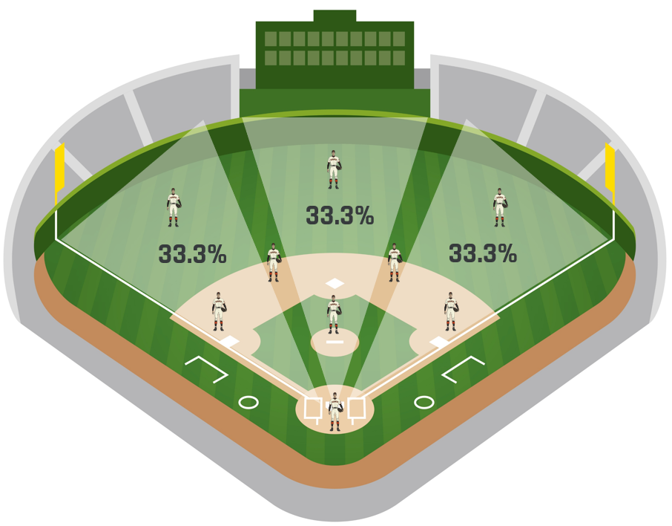
For over 100 years baseball had been played the same way. Defensively, it was believed the optimal way to get a batter out was to distribute players equally across the field to maximize ground coverage. In the early 2010s, data showed that shifting defensive players to where a batter was statistically more likely to hit the ball was associated with a lower Batting Average on Balls in Play (BABIP), giving the team the potential for a better winning percentage.
In the world of asset management, we believe using data to shift risk exposure, asset classes, and other characteristics as market conditions change is a disciplined way to pursue our objective of balancing risk and return over time. Financial markets are far more complex than a defensive alignment on a baseball diamond, and a data-driven approach does not carry the same certainty as a settled sports statistic—but we believe the same underlying idea, using observed data to inform positioning, applies.
Typical Asset Management
PlanWiser Asset Management
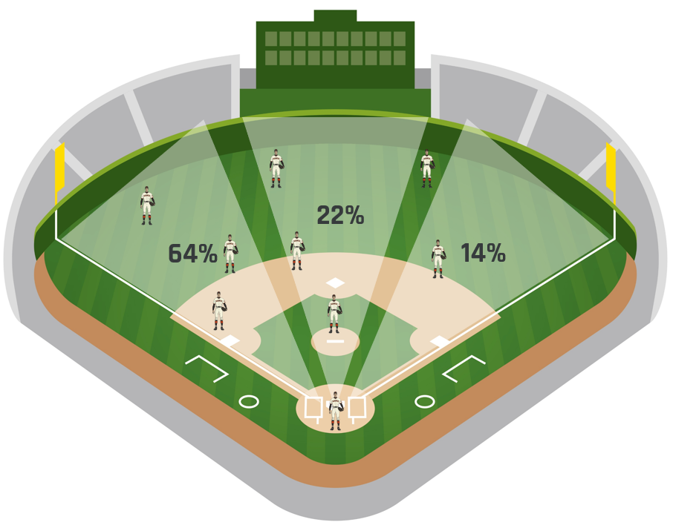
By leveraging the observations of where the baseball has landed historically, a batter’s tendencies can be calculated. Similarly, by observing the risk/return characteristics of different investment research, we can seek to increase the odds of driving advantageous outcomes by changing the investment allocation.
Quantitative Asset Management
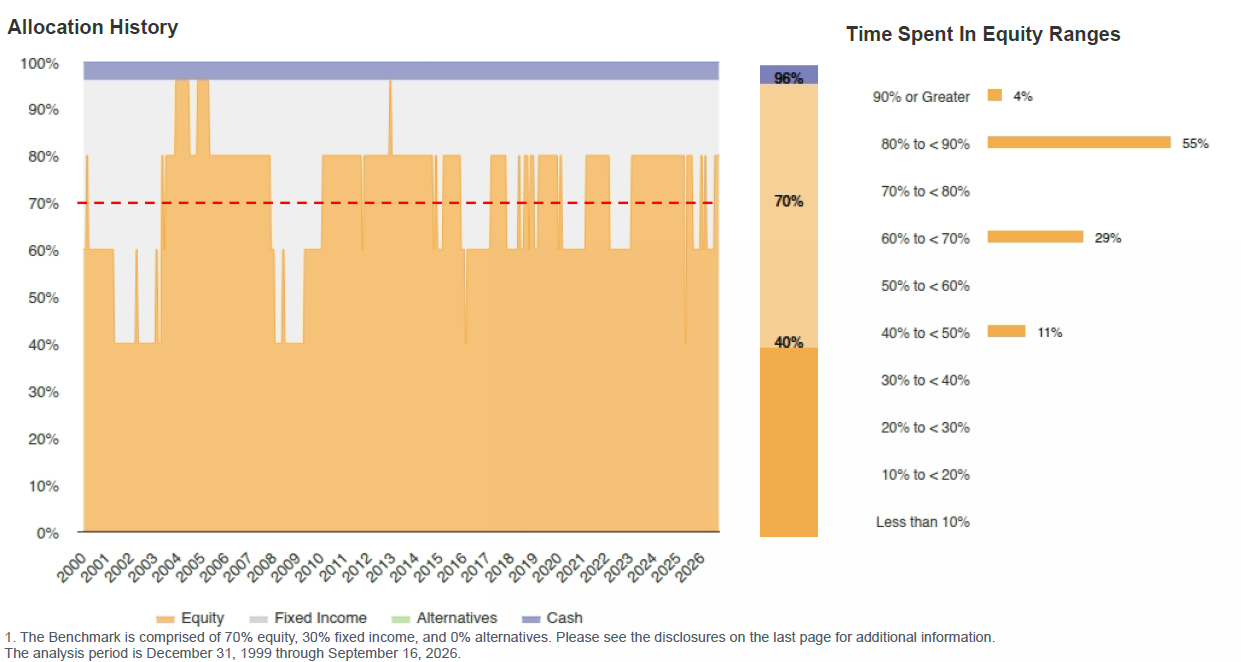
Quantitative investing (often referred to as “Quant”) is the use of mathematics, statistics, and systematic processes to make investment decisions. Quant is what allows us to make the shifts to risk exposure and asset classes discussed in the baseball analogy.
This approach is widely used by institutional asset managers, pension funds, endowments, and hedge funds because it seeks to improve consistency and remove emotional decision-making from the investment process. At PlanWiser, we believe individual investors should have access to the same level of sophistication and risk management traditionally reserved for large institutions.
Going back to the baseball analogy, shifting defensive players to where the batter tended to hit the ball resulted in a lower Batting Average on Balls in Play (BABIP), a very positive outcome. However, it also created unique negative times when it didn’t work. Both the positive and negative outcomes compared to the standard fielding positioning is called variance. Analogously, at PlanWiser, we are aiming for positive, long-run variance relative to a benchmark. While emotionally uncomfortable, periods of substantial negative variance will occur too. This is the tradeoff, and we believe the juice is worth the squeeze.
Elements: The Quantitative DNA
The collection of quantitative models we use are called Elements. Elements are the foundational building blocks of our investment process. Each Element evaluates markets through a specific quantitative lens using statistical analysis, historical relationships, trend behavior, volatility measurements, or other evidence-based methodologies.
These Elements help determine the appropriate level of portfolio risk exposure at a given point in time. Depending on the data, an Element may indicate:
A more defensive posture designed to help protect capital during periods of elevated risk
A neutral positioning
A more growth-oriented posture intended to participate in favorable market condition.
Strategies: Designed for Different Investors
Our client portfolios are organized into investment Strategies, each identified by an animal name. Just as animals are shaped by unique combinations of DNA, our Strategies are built from combinations of quantitative “DNA”—the Elements.
While different Strategies may share certain Elements, each combines them uniquely to create distinct investment characteristics, risk profiles, and investor experiences. For even greater diversity, different Strategies can be combined in different ways to create unique characteristics.
These Strategies—and combinations of Strategies—are designed with several objectives in mind:
Managing investment risk
Supporting disciplined decision-making
Improving the investor experience
Remaining aware of tax consequences
Seeking consistent long-term compounding opportunities
Summary
We think in probabilities, not predictions.
Our decisions aren't driven by emotion or headlines. We follow a disciplined, data-driven process that intentionally manages risk and adjusts portfolio positioning as conditions change. That structure is designed to reduce guesswork and keep decisions aligned with the long-term plan, not short-term noise.